Abstractions & Why They Matter
Understanding system abstractions and their importance in design
📘 Part 1: Foundations & Abstractions in System Design
Overview
In this foundational module, we explore three core mental models that shape how we design scalable, modular systems:
These concepts aren't just theoretical—they're the scaffolding behind every system design interview and real-world architecture.
🧠 Abstraction: Hiding Complexity
Abstraction allows us to focus on what a component does, without worrying about how it works internally. It simplifies reasoning, enables reuse, and keeps systems modular.
Example: Cache
When you use a cache, you call .get() or .set() expecting fast access. You don't need to understand TTLs, eviction policies, or memory management. That internal complexity is abstracted away.
Real-World Analogy: Power Outlet
Think of a wall socket. You plug in your device and get electricity. You don't think about how power is generated or routed. The outlet is an abstraction—it hides the entire electrical grid behind a simple interface.

Common Abstractions in System Design
Understanding what each component abstracts helps you reason about tradeoffs and structure your designs clearly.
🧭 Layered Thinking: Organizing Complexity
Layered thinking helps us break down systems into distinct layers, each solving a specific problem. This structure improves modularity, fault isolation, and clarity.
Typical Layered Stack
Each layer abstracts the one below it and encapsulates its own logic.
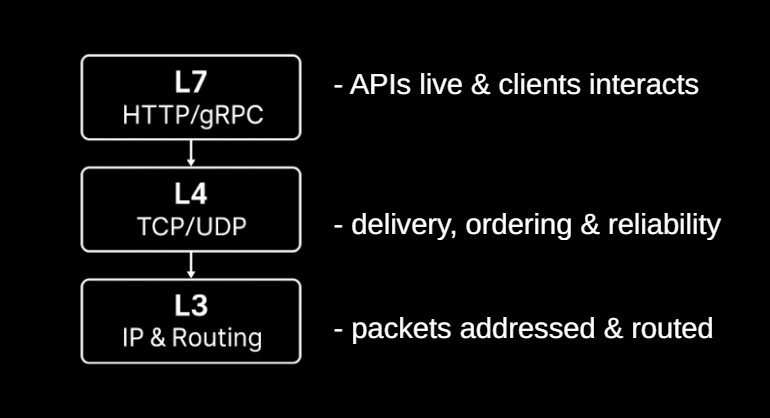
Example: Chat System
This layered approach helps you explain your design clearly and isolate failure domains.
💡 We'll go deeper into each layer—especially networking, APIs, and storage—in future modules.
🧱 Encapsulation: Protecting Complexity
Encapsulation means packaging internal logic behind a boundary, exposing only what's necessary. It allows components to evolve independently without breaking external contracts.
Example: Microservice
A microservice might expose an API, but hide its internal database and business logic. You can refactor or scale the internals without affecting consumers.
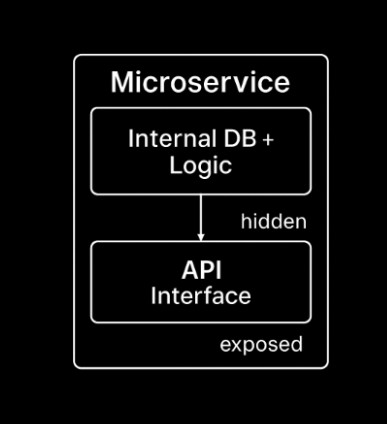
Encapsulation in Practice
hides retry logic
hides eviction strategy
hides DB and business rules
Encapsulation makes systems easier to evolve, test, and scale.
🎓 Recap & Interview Relevance
You won't be asked to define these concepts directly in interviews. But every system design problem—whether it's a chat app, a feed, or a payment flow—expects you to use them.
They shape how you structure your answer, isolate components, and reason about tradeoffs.
✅This is just the foundation. We'll go deeper into each layer and component in future modules.